What does the data collected by Private and Regulatory Agencies monitors tell us about the air quality in Westside Costa Mesa?
Data Collected in the last 5 years

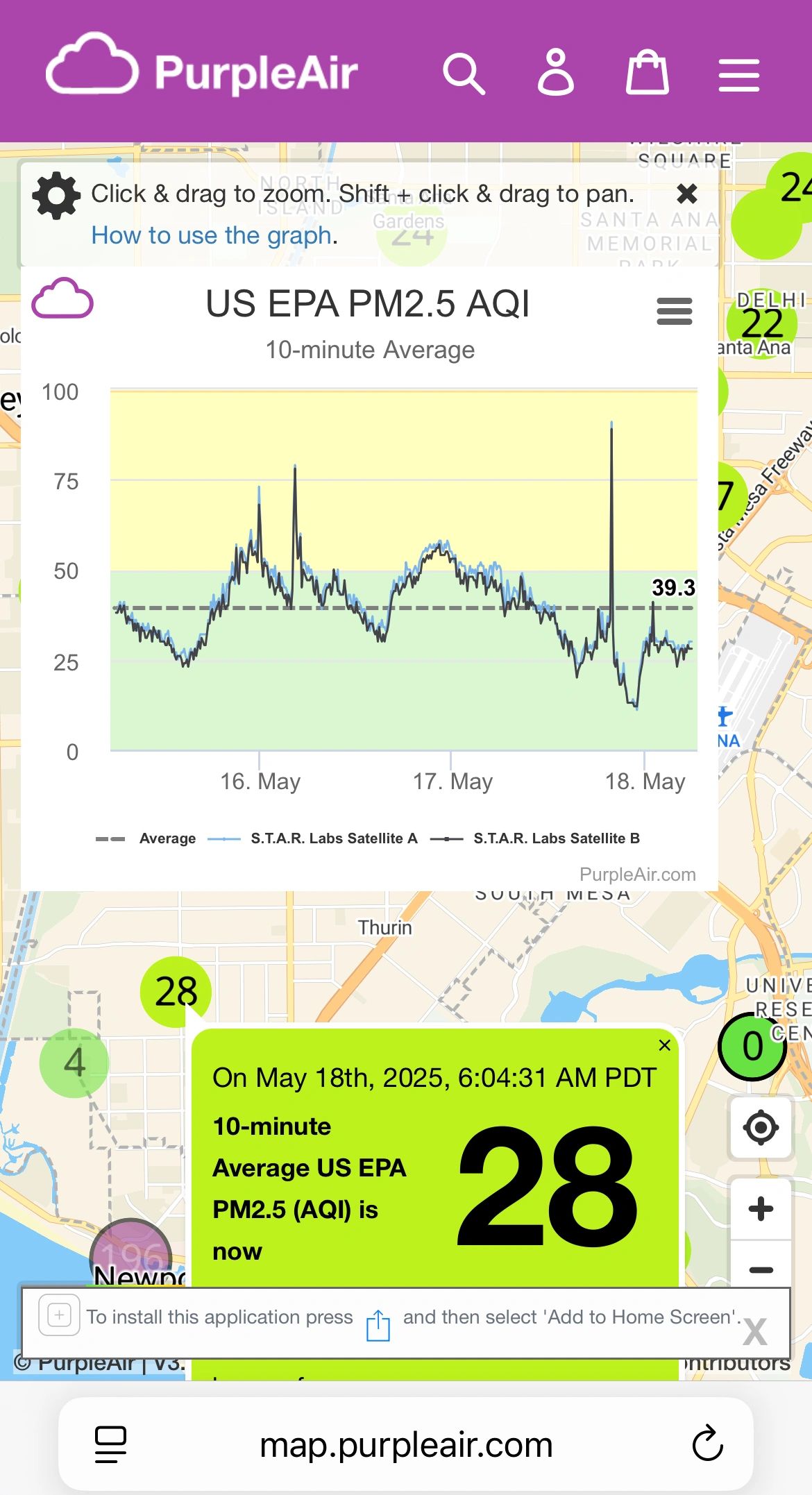



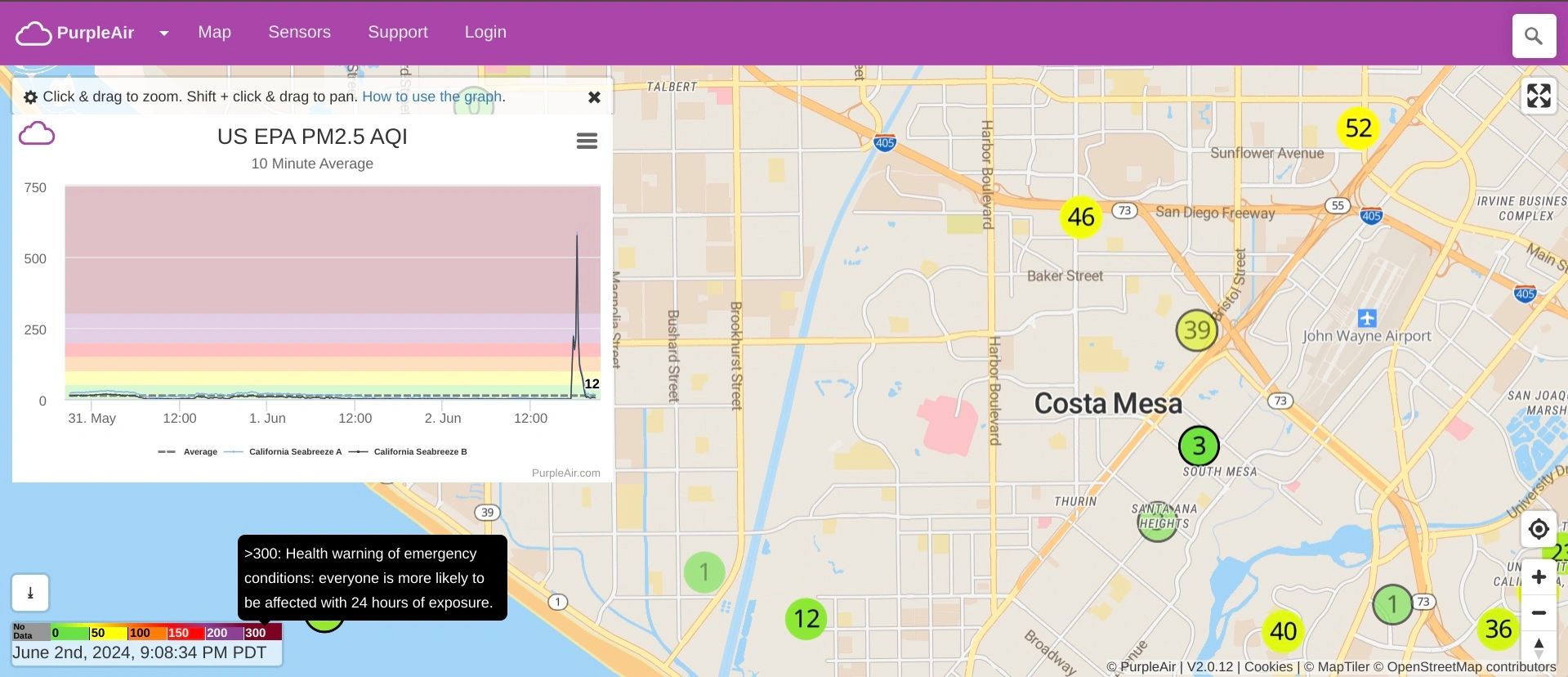



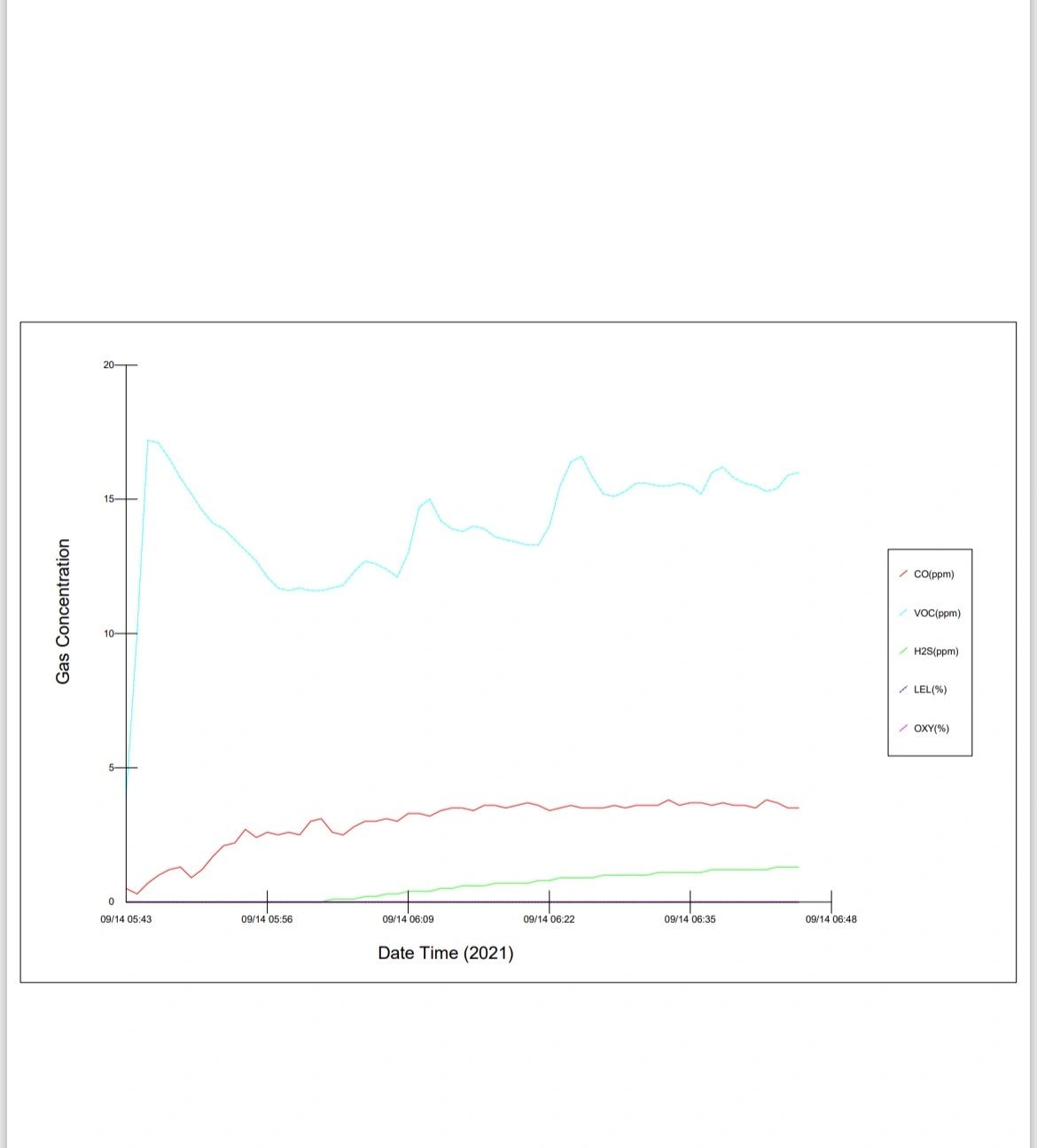

Real Time Data Analysis.
Pollution Conditions in the Westside of Costa Mesa
The Westside of Costa Mesa is experiencing air‑quality conditions that routinely rise into ranges considered dangerous for breathing, especially for sensitive groups, older adults, and children. Multiple PurpleAir and EPA AirNow readings in the area show particulate matter (PM2.5) and volatile organic compounds (VOCs) reaching levels far above what is considered healthy. On February 5th, 2025, a PurpleAir sensor recorded an AQI of 166, noting that “members of the general public may experience health effects with 24 hours of exposure; members of sensitive groups may experience more serious health effects” . Even the short‑term readings were elevated, with the 10‑minute average at 166, the 30‑minute at 157, and the 1‑hour at 119, all well above safe thresholds.
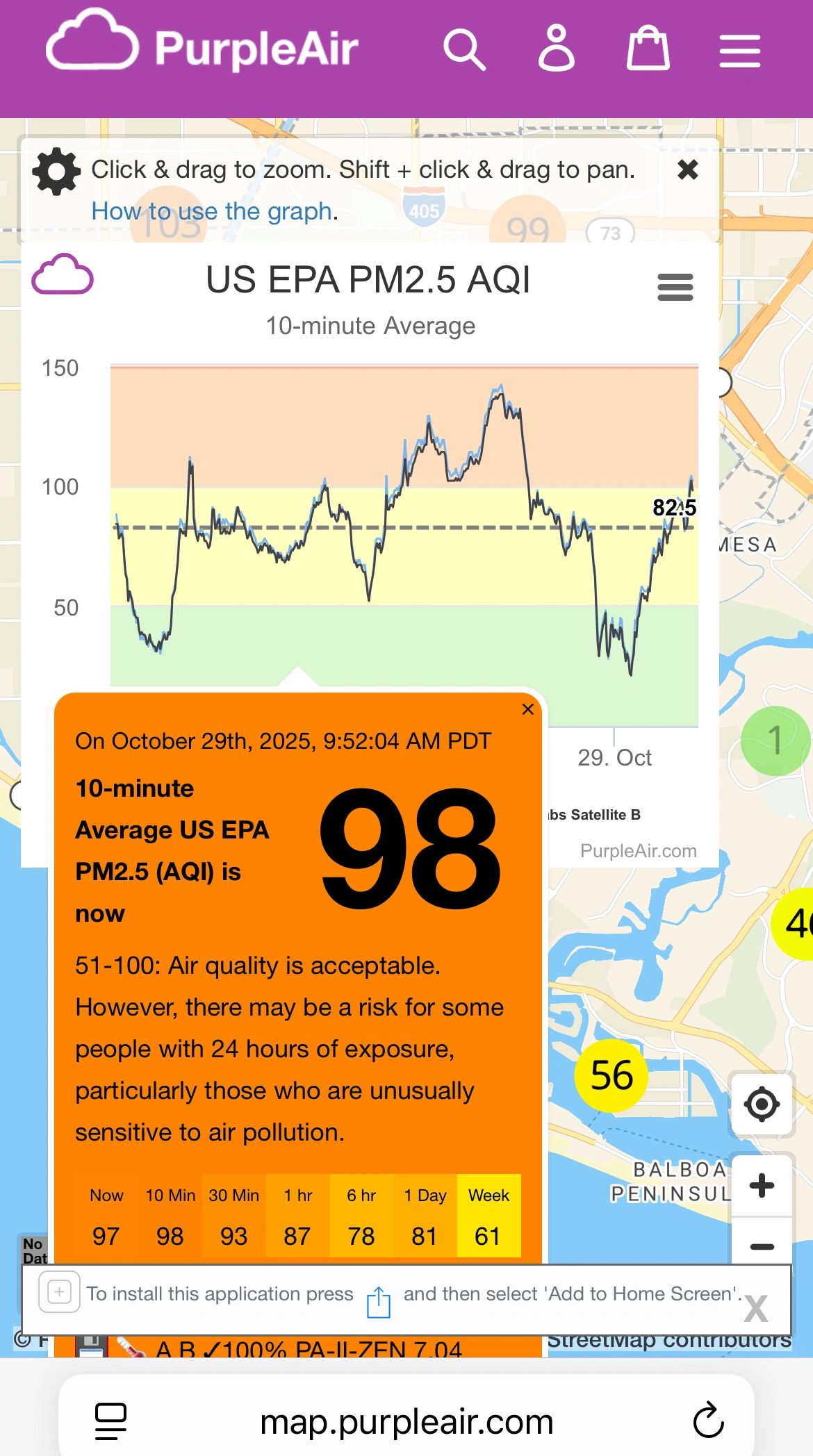
These high PM2.5 levels are not isolated events. On October 29th, 2025, the Westside registered an AQI of 98, which is technically “acceptable,” but still accompanied by a warning that “there may be a risk for some people with 24 hours of exposure, particularly those who are unusually sensitive to air pollution” . Other days showed readings in the 80–100 range, which is considered unhealthy for sensitive groups. The AirNow system also recorded 104 AQI on November 1st, 2025, categorized as Unhealthy for Sensitive Groups .
Beyond particulate matter, VOC measurements taken outdoors and indoors on June 12–13, 2025 show chemical concentrations that can irritate the respiratory system. For example, outdoor VOC readings reached 0.120 ppm (0.720 mg/m³) at a House West of Monrovia Ave, and indoor readings in the clubhouse reached 1.200 ppm at 16:00 and 1.100 ppm at 17:00 . According to the document’s own TVOC guidance, levels above 500–1500 ppb begin entering “Very Bad” ranges, and levels above 2500 ppb are considered hazardous. The data show repeated excursions into these elevated zones.
These pollution levels have real health implications. PM2.5 particles penetrate deep into the lungs and bloodstream, increasing risks of asthma attacks, chronic bronchitis, cardiovascular stress, and long‑term lung damage. VOCs add another layer of harm, contributing to headaches, nausea, airway inflammation, and potential neurological effects with prolonged exposure. The combination of industrial activity, freeway proximity, and stagnant air patterns in the Westside drainage basin—identified in the document as Basin 7128, draining toward the Santa Ana River and the Pacific Ocean—creates a persistent environmental burden on residents.
The data make clear that the Westside of Costa Mesa is not experiencing occasional pollution spikes; it is living with sustained air‑quality conditions that frequently rise into ranges considered unhealthy. When AQI values climb above 150, as they did on February 5th, the air becomes too polluted to breathe safely, even for healthy adults. Sensitive groups face heightened risks daily, and the presence of VOCs compounds the danger. These conditions underscore the urgent need for mitigation, monitoring, and community‑level interventions to protect public health.
This website uses cookies.
We use cookies to analyze website traffic and optimize your website experience. By accepting our use of cookies, your data will be aggregated with all other user data.